Kenyan AI App Terp 360 Wins Innovation Prize for Real-Time Sign Language Translation
An African entrepreneur's AI-powered app offers a transformative solution for real-time sign language translation, enhancing accessibility and inclusion for deaf communities across the continent.

Subscribe to our newsletter and discover often overlooked stories of innovation, culture, development, and social progress in Africa.
Article Summary
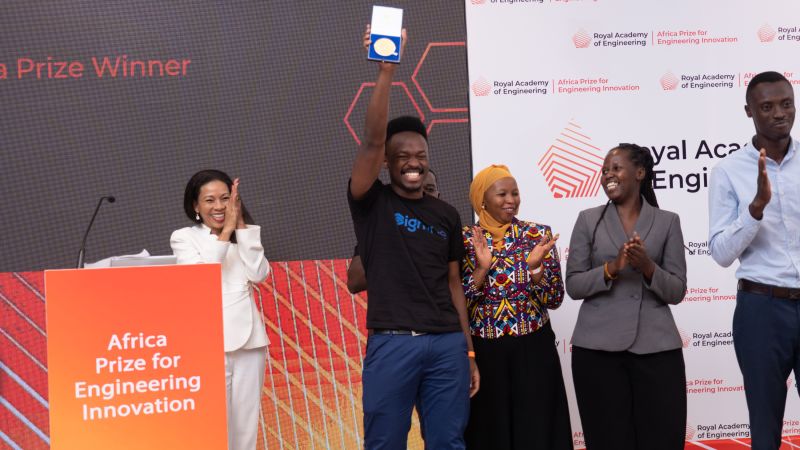
Kenyan entrepreneur Elly Savatia won the Royal Academy of Engineering’s Africa Prize for Engineering Innovation for his app, Terp 360. This web-based app utilizes AI-powered 3D avatars to translate speech and text into sign language in real-time, aiming to enhance communication accessibility for the deaf community. The app currently supports Kenyan Sign Language from English and Swahili, with plans for expansion to other African and global sign languages.
Original Article: edition.cnn.com
[ Sentiment: positive | Tone: factual ]
This summary and analysis were generated by TheNewsPublisher's editorial AI. This content is for informational purposes only.
[ Sentiment: positive | Tone: factual ]
This summary and analysis were generated by TheNewsPublisher's editorial AI. This content is for informational purposes only.
TNP AI: Key Insights
How does this innovation challenge common perceptions about technological development in Africa? This innovation demonstrates African capacity for developing cutting-edge AI solutions, directly countering the stereotype that Africa is a recipient rather than a creator of advanced technology. It highlights local agency in leveraging global technological trends for continent-specific challenges.
What broader societal impact does an assistive technology like Terp 360 have beyond direct communication? Terp 360 addresses systemic barriers to education, employment, and healthcare for deaf communities, promoting social inclusion and economic participation. This reflects a broader trend of African innovators creating solutions that enhance equity and human rights.
How does the development process of Terp 360 reflect an understanding of Africa's linguistic and cultural diversity? The app's development in conjunction with deaf Kenyans and its focus on Kenyan Sign Language, with plans to incorporate other African sign languages, acknowledges the continent's diverse linguistic landscape. This approach avoids a 'one-size-fits-all' solution, recognizing the distinct cultural and communicative needs across different regions.