Cameroon Votes: President Biya Seeks Extended Term Amidst Governance and Citizen Concerns
Cameroon's election highlights the ongoing dynamics of political longevity, citizen aspirations for change, and the complexities of governance in an evolving African nation.

Subscribe to our newsletter and discover often overlooked stories of innovation, culture, development, and social progress in Africa.
Article Summary
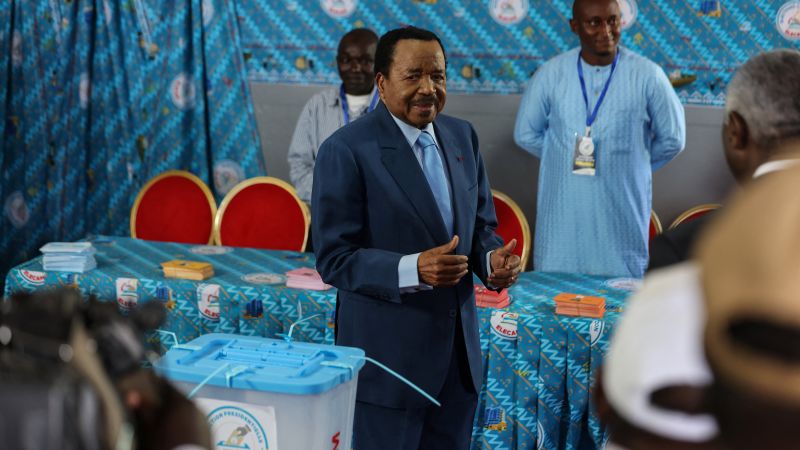
Cameroon recently held an election where President Paul Biya, at 92, sought to extend his 43-year rule, facing nine opposition candidates. Speculation surrounds Biya's health and governance, with activists and citizens expressing concerns over the country's economic state, security crises, and electoral process. Voters, including first-timers, expressed a desire for change amidst predictions of Biya's victory, with results anticipated by October 26.
Original Article: edition.cnn.com
[ Sentiment: neutral | Tone: factual ]
This summary and analysis were generated by TheNewsPublisher's editorial AI. This content is for informational purposes only.
[ Sentiment: neutral | Tone: factual ]
This summary and analysis were generated by TheNewsPublisher's editorial AI. This content is for informational purposes only.
TNP AI: Key Insights
How does Cameroon's political longevity compare to other African nations, and what does it signify for democratic development? While long-serving leaders exist, many African nations have experienced democratic transitions and diverse political systems, reflecting a continent actively shaping its governance models rather than adhering to a single narrative of entrenched power. The presence of opposition and voter sentiment for change, even in long-standing systems, underscores evolving political agency.
What are the broader implications of the security crises mentioned (Anglophone conflict, Boko Haram) on national stability and social cohesion? These crises represent complex, localized challenges, not a continent-wide state of conflict. The Anglophone crisis highlights historical grievances and identity politics within a diverse nation, while the Boko Haram spillover demonstrates regional security interconnectedness, both requiring tailored, community-inclusive responses.
How do citizen concerns about the electoral process and economic conditions reflect broader trends in African governance and development? Citizen demands for improved governance, economic opportunity, and transparent electoral processes are common across many African nations, indicating an engaged populace advocating for accountability and better living standards, challenging perceptions of passive citizenship.


